Frequently Asked
Questions
Straightforward answers about hormone health, thyroid conditions, and what to expect from endocrine care.
Endocrinology Basics
What is endocrinology?
Endocrinology is the study of hormones and their impacts on the body, traditionally related to pathology/disease associated with hormone dysfunction.
What are commonly treated endocrinology problems?
Most common is diabetes (disease of glucose metabolism) with next most common being thyroid disease, specifically hypothyroidism.
Who handles endocrinology problems?
Endocrinologists traditionally treat any type of endocrinology disease, but often primary care physicians will participate in management of common endocrinology diseases such as diabetes and hypothyroidism.
What are some examples of endocrinology diseases?
These include thyroid diseases which impact thyroid hormone production, adrenal diseases that impact specific adrenal hormone production, pituitary diseases that result in specific pituitary hormone issues, metabolism issues related to bone turnover or glucose management.
What are endocrinology glands?
Components of the body which released specific hormones that impact the body systemically. These include the thyroid, the adrenal glands, the pituitary gland, and the parathyroid glands.
Thyroid Disease
What is the most common thyroid disease?
Subclinical hypothyroidism impacts about 4.3% of the US population which makes it the most common functional thyroid disease, however, thyroid nodules impact about 50% of patients over the age of 50 years old making it the most common thyroid-related disorder in general.
How common is thyroid disease?
About 8-10% of the US population has a functional/hormonal thyroid problem. If we include thyroid nodules as a component of thyroid disease, it may be about 50% of the US population who has “thyroid disease.” It is important to realize though thyroid nodules are not normal, they are very common and may not represent pathological disease.
What are the symptoms of thyroid disease?
It depends on which thyroid disease that is being considered. Hypothyroidism is often associated with cold intolerance, fatigue, weight gain (but of only ~10 pounds usually), muscle weakness, and a host of other complaints. Hyperthyroidism/ thyrotoxicosis is often associated with fast heart rate/ palpitations, excess sweating, unexpected weight loss, hand tremors, and a host of other complaints. Thyroid mass/ fullness/ goiter can be associated with difficulty swallowing, problems with the voice, choking sensations and other complaints.
Thyroid Nodules & Thyroid Cancer
What should be done to treat thyroid nodules?
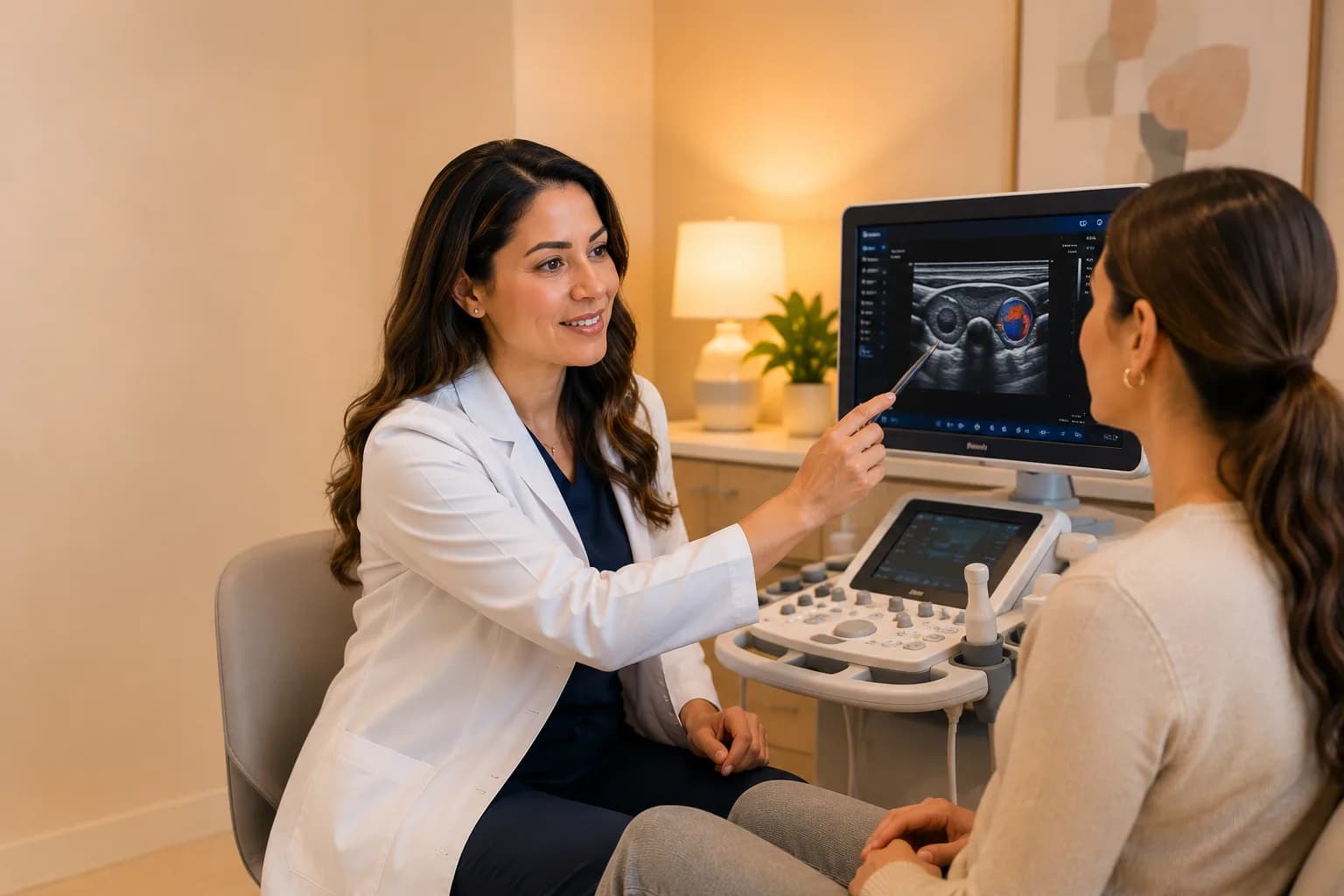
Several US guidelines have been published, each which give specific recommendation about how to proceed with thyroid nodules management which depends on the size and ultrasound features of the nodules. Options can include forgoing any further investigation, tracking ultrasound measurements and features periodically, or getting needle sampling of the nodules to determine cancer risk.
What is treatment for thyroid cancer?
This depends on the risk of death and risk of recurrence in a specific case. This can often include an idealized surgery, possible radioactive iodine ablation, and maintenance of ideal TSH level. In some cases observation without surgery can be advocated.
Is radioactive iodine required for thyroid cancer treatment?
It is not mandatory for treatment of thyroid cancer and with each iteration of the thyroid cancer guidelines from the American Thyroid Association (2005 to 2015 to 2025) the recommendation for radioactive iodine ablation became more exclusive to those cases with the highest risk of death and recurrence.
Parathyroid & Calcium
What are endocrinology reasons for high calcium?
If by endocrinology reason one means disorder of an endocrine gland or hormone, then hyperparathyroidism is the most common reason. There can be non-endocrine related causes for high calcium level in the blood.
What are the symptoms of hyperparathyroidism?
Traditionally, all the clinical symptoms related to hyperparathyroidism are thought to be related to the effect of high calcium levels in the blood, such as more frequent urination, kidney stone emergence, altered mental status with substantially elevated blood calcium, dehydration in severe circumstances, fractures due to bone weakness, however, there is a consideration of non-specific symptoms like fatigue being related to hyperparathyroidism.
Pituitary & Adrenal Masses
What is the treatment for pituitary masses?
Firstly, there has to be clarity on whether the mass is truly of pituitary origin. Subsequent evaluation of hormones will depend on the size of the mass. The need to clarify whether there is hormonal overproduction or underproduction depends on the size of the mass. If there is hormonal overproduction and/or underproduction and which types of hormone are involved will help determine next steps.
What is treatment for adrenal masses?
Treatment depends on evaluation into the nature/origin of the mass and whether there is any hormonal component to the disease/ hormonal overproduction.
Still have a question? Get in touch and we will be glad to help — or see all the conditions we treat.
Take the First Step Toward Better Endocrine Health
Partner with a physician dedicated to helping you understand your condition, receive effective treatment, and achieve long-term wellness.